


Álvarez could terminate his contract. A court would decide the price of freedom
Spanish law may allow Julián Álvarez to terminate his Atlético Madrid contract, but Barcelona could become liable for a major compensation payment.
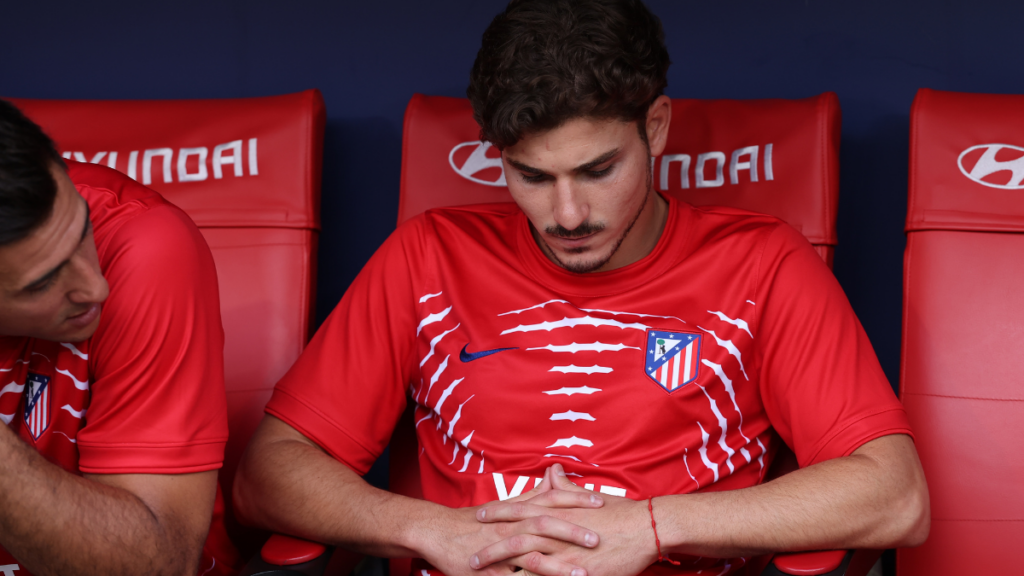
Atlético Madrid are not required to negotiate with Barcelona and can reject every offer for Julián Álvarez. That does not mean the player has no legal route out of the club. Spanish law allows a professional athlete to terminate an employment contract unilaterally. The difficulty begins when the cost of that decision must be established.
The situation was examined by sports lawyer Tania Tejeira Perera in an analysis published by Mundo Deportivo’s Palco23. The relevant legislation is Spain’s Royal Decree 1006/1985, which governs the employment relationship of professional athletes.
Article 13 allows an employment relationship to end at the athlete’s request. Article 16 sets out the consequences when a player terminates a contract without the club being responsible. Atlético would be entitled to compensation.
This would therefore not be a free transfer or a convenient shortcut around negotiations. Álvarez is under contract until 2030 and has a €500 million release clause. That figure would provide a reference point in any dispute, but a labour court could consider the player’s sporting importance, the actual damage suffered by Atlético, his reasons for leaving, his salary, the remaining length of the agreement and his market value.
The central question would be whether the entire €500 million could be enforced or whether the amount should be reduced as disproportionate. A high release clause is not automatically invalid. The court would need to examine the contract and all the circumstances surrounding its termination.
Barcelona would not remain safely outside the dispute. If Álvarez joined another club within one year of terminating his contract, his new employer would hold subsidiary responsibility for the resulting financial obligations. Barça could therefore inherit the risk of a bill whose final value might only become known after litigation.
Article 16 of the decree focuses on financial compensation rather than imposing an automatic sporting ban for formally terminating the agreement. That mechanism should not be confused with refusing to train or play. Simply failing to report for work would constitute a breach of the player’s obligations and could result in disciplinary action and further claims from Atlético.
Álvarez would need to terminate the employment relationship formally and accept the subsequent dispute over its financial consequences. Barcelona would simultaneously require confidence that the player could be registered and a willingness to assume a cost that cannot be calculated precisely in advance.
Time remains the largest obstacle. The Spanish transfer window closes at 23:59 on 1 September, while a court does not operate according to the final days of the football calendar. The law may provide a route out of Atlético without guaranteeing that it can be completed quickly enough.
For now, this remains an analysis of a possible legal mechanism rather than a procedure that has already begun. Álvarez has not announced the unilateral termination of his contract, and Barcelona have not confirmed any intention to use this route.
Atlético can continue refusing to negotiate. What the club cannot do is prevent Álvarez from remaining an employee protected by Spanish labour law. A legal exit exists. Barcelona would simply have to walk through it with him and wait for the court to deliver the bill.