

Real Madrid TV highlights contrasting refereeing standards for Madrid and Barcelona
Real Madrid TV compared decisions, VAR interventions and referees' conversations with Real Madrid and Barcelona players in a new feature.
Real Madrid TV has aired an extensive feature comparing refereeing decisions and on-field communication involving Real Madrid and Barcelona players. The club channel used incidents from the current season, alongside a handful of earlier examples, to argue that similar actions have produced markedly different outcomes.
This was not an independent refereeing review, but an editorial piece produced by Real Madrid’s own broadcaster. That distinction matters. However, the footage contains specific incidents that viewers can assess for themselves when considering whether the contrasts are merely a matter of interpretation or evidence of inconsistent officiating.
FROM THE OSORIO INCIDENT TO PENALTY APPEALS
One of the central examples came from Elche’s match against Real Madrid. Real Madrid TV focused on Álvaro Rodríguez Osorio’s challenge on Dean Huijsen, arguing that the Elche player used his elbow away from the ball. Referee Jesús Gil Manzano did not show a yellow card and VAR did not send him to the monitor. Osorio stayed on the pitch and scored for Elche in the 71st minute.
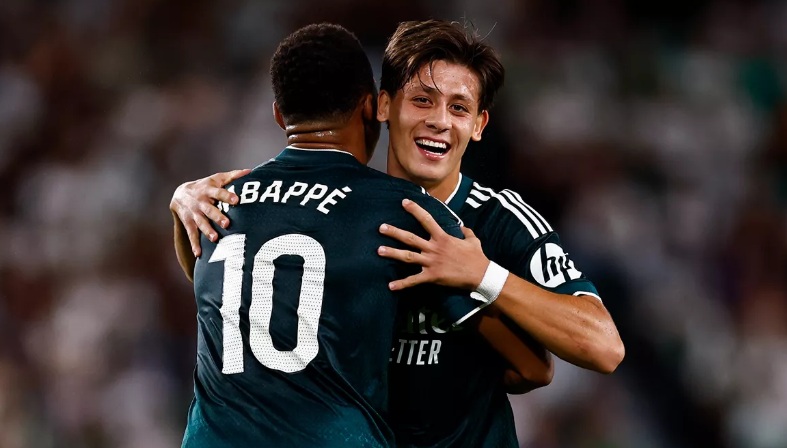
The programme also revisited Real Madrid’s game against Rayo Vallecano. It highlighted possible fouls on Kylian Mbappé and Arda Güler that did not result in penalties, before contrasting them with spot kicks awarded to Barcelona following incidents involving Lamine Yamal and Raphinha. Those conclusions belong to Real Madrid TV and should not be presented as official findings by Spain’s refereeing authorities.
Broadcast coverage was another part of the complaint. The club channel claimed that incidents potentially favouring Madrid are often replayed from numerous angles, while footage that could support the club’s appeals appears late or is omitted from official highlights. In other words, the criticism was directed not only at decisions on the field but also at how matches are presented to the public.
A DIFFERENT TONE WITH THE PLAYERS
The second strand of the feature examined referees’ conversations with players. Real Madrid TV showed Gil Manzano speaking firmly to captain Federico Valverde during the Elche match. It also recalled Vinícius Júnior receiving a yellow card after approaching Alejandro Hernández Hernández while wearing the captain’s armband against Real Betis.
Those scenes were contrasted with relaxed exchanges involving Barcelona players. The compilation included Ortiz Arias joking about Raphinha’s moustache, a light conversation after a heavy Lamine Yamal challenge, and words of praise addressed to Dani Olmo and Pedri.
A friendly exchange does not prove favourable decision-making. Real Madrid TV nevertheless used the contrast to reinforce its argument that players from the two clubs are not always addressed — or managed — in the same way.
THE QUESTION IS CONSISTENCY
After the feature aired, presenter Álvaro de la Lama responded to accusations of manipulation. He encouraged viewers to watch the incidents without narration and judge the referees’ decisions on their own.
No pair of apparently similar challenges is automatically identical. Contact point, force, timing and the wider context can justify different decisions. Yet when the comparison covers penalties, disciplinary sanctions, VAR intervention and direct communication, the question of consistency cannot simply be dismissed because the argument came from a club channel.
Real Madrid TV has presented a forceful case. A convincing response now requires transparency from the bodies responsible for refereeing in La Liga, rather than another round of selective clips and competing club narratives.