


Four midfielders unavailable as Mourinho is left with Valverde for Inter
Silva, Güler and Camavinga are suspended while Tchouaméni remains injured, leaving Mourinho with a major midfield problem against Inter.
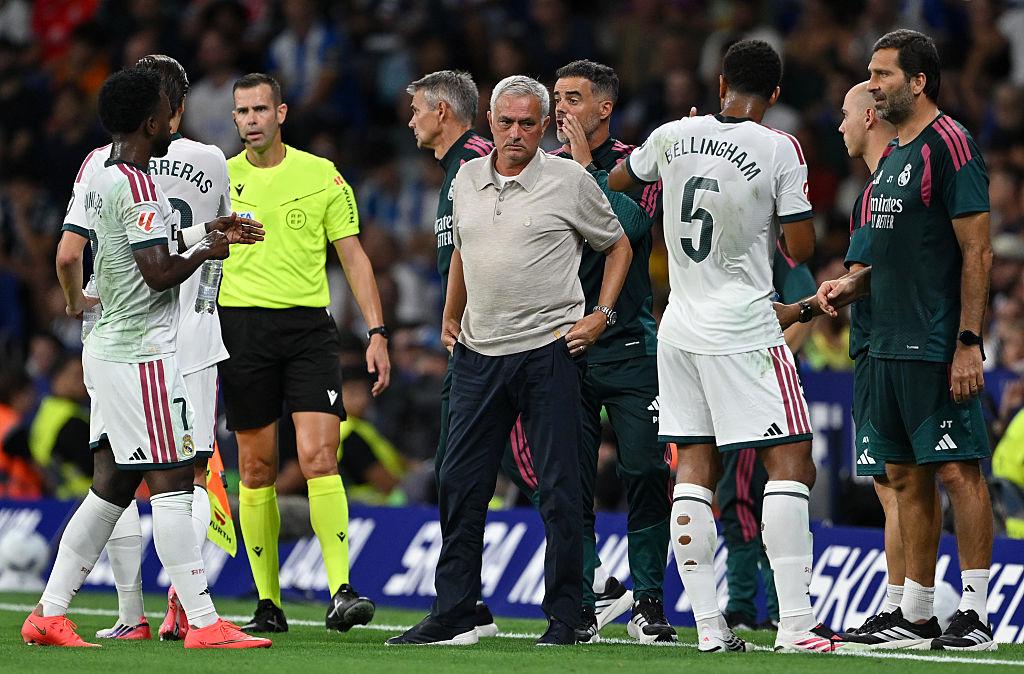
José Mourinho must rebuild Real Madrid’s midfield for the opening game of their Champions League campaign. Bernardo Silva, Arda Güler and Eduardo Camavinga are suspended, while Aurélien Tchouaméni has not completed his recovery from a muscular injury.
As things stand, Federico Valverde is the only natural senior central midfielder available to Mourinho. Tchouaméni’s situation has not been formally settled, however. The Frenchman is approaching a return but remains a major doubt, with Madrid’s official squad for the Inter Milan game yet to be announced.
THREE SUSPENSIONS AND ONE INJURY
All three suspensions have been carried over from last season’s Champions League. Bernardo Silva was sent off against Real Madrid while still representing Manchester City, whereas Güler and Camavinga received red cards during Madrid’s quarter-final tie against Bayern Munich.
Tchouaméni has yet to play this season because of a muscular problem. Reports indicate that he is getting closer to full fitness, but Mourinho is reluctant to take an unnecessary risk. Even if the midfielder makes the squad, starting such a demanding game immediately after a lengthy absence would be a significant gamble.
Thiago Pitarch is also unavailable. The academy midfielder continues to recover from the knee injury he suffered early in preseason. He is not included among the four main first-team absences, but his injury removes another possible emergency option.
BELLINGHAM OFFERS THE MOST OBVIOUS ANSWER
If Madrid retain their 4-2-3-1 formation, Jude Bellingham appears to be the most logical player to partner Valverde. The England international has extensive experience in a deeper midfield role, although Mourinho has made it clear that he prefers to use Bellingham closer to goal.
Moving him into the double pivot would improve Madrid’s ability to progress the ball, but it would also reduce his presence around Inter’s penalty area. Brahim Díaz could take over the number ten role in that setup.
A switch to 4-3-3 would create another route. Valverde could anchor the midfield with Bellingham to his left and Trent Alexander-Arnold operating on the right. Trent has already moved into central areas from right-back under Mourinho, helping Madrid build possession with his passing range. It would not be a conventional midfield, but it could provide enough control without sacrificing Bellingham’s attacking influence entirely.
Dean Huijsen is another theoretical candidate. The defender is comfortable carrying and distributing the ball, although moving him forward would weaken one of Madrid’s main strengths in the buildup from defence.
CESTERO COULD RECEIVE HIS CHANCE
The shortage may also create an opportunity for Jorge Cestero. The 20-year-old academy player has already made five senior appearances, including a Champions League outing against Benfica. Mourinho involved him during preseason and has continued monitoring his development.
Starting Cestero next to Valverde would be a bold decision, but it would allow Bellingham to remain in his preferred attacking position. Valverde’s experience and defensive range could also provide the protection needed to introduce a young midfielder in a demanding fixture.
Madrid therefore have a selection problem rather than a complete absence of solutions. Bellingham’s versatility, Trent’s ability to move inside, Huijsen’s quality on the ball and Cestero’s emergence give Mourinho several ways to reconstruct the unit.
VALVERDE BECOMES THE KEY FIGURE
Whatever formation Mourinho selects, Valverde will be central to it. His defensive work, stamina and ability to cover large spaces will be vital against an Inter side that has started the Serie A season with a perfect record. The Italian champions came from two goals down to beat Napoli 3-2 in their latest match.
Madrid enter the game after suffering their first defeat of the season, a 1-0 loss to Real Betis. The Champions League offers an immediate chance to respond, and their home record against Inter provides solid grounds for confidence. Madrid have won eight of the nine meetings between the clubs on their own ground, including the last seven.
Mourinho will not have the midfield he planned to use at the start of the campaign. He will still have Valverde, a group of versatile players and several credible tactical alternatives. Managing those resources intelligently will be the central challenge of Madrid’s European opener.